

Customer guide
Frequently asked questions
Everything you need to know about owning an MG in Kenya, from charging and running costs to service, warranty and financing. 29 answers across six sections.
Getting to know MG
Start here if MG is new to you. This section explains who we are, where the vehicles come from and what is available in Kenya today.
MG stands for Morris Garages, a British marque founded in 1924 in Oxford, England. The badge you see on your vehicle has been on the road for more than a century.
Today, MG pairs that British heritage with modern global engineering to build vehicles that are stylish, safe and technology-led.
MG exists to make smart, safe, stylish and sustainable mobility available to everyone, not only to buyers at the top of the market. In practice, that means well-equipped vehicles with advanced technology, offered at a price that stays within reach.
MG is a British brand with a global manufacturing footprint. Vehicles sold in Kenya are produced in MG Motor facilities that operate to strict international quality standards.
Good to know
Buying through Simba Corporation, the appointed distributor, means your vehicle arrives through the official channel with a full manufacturer warranty and a traceable history. This matters when you come to service, claim or resell.
Six things tend to stand out to our customers: a British heritage dating back to 1924; modern design and a genuinely comfortable cabin; advanced safety systems fitted as standard; intelligent technology and connectivity; strong value for the specification you receive; and a comprehensive warranty backed by local aftersales support.
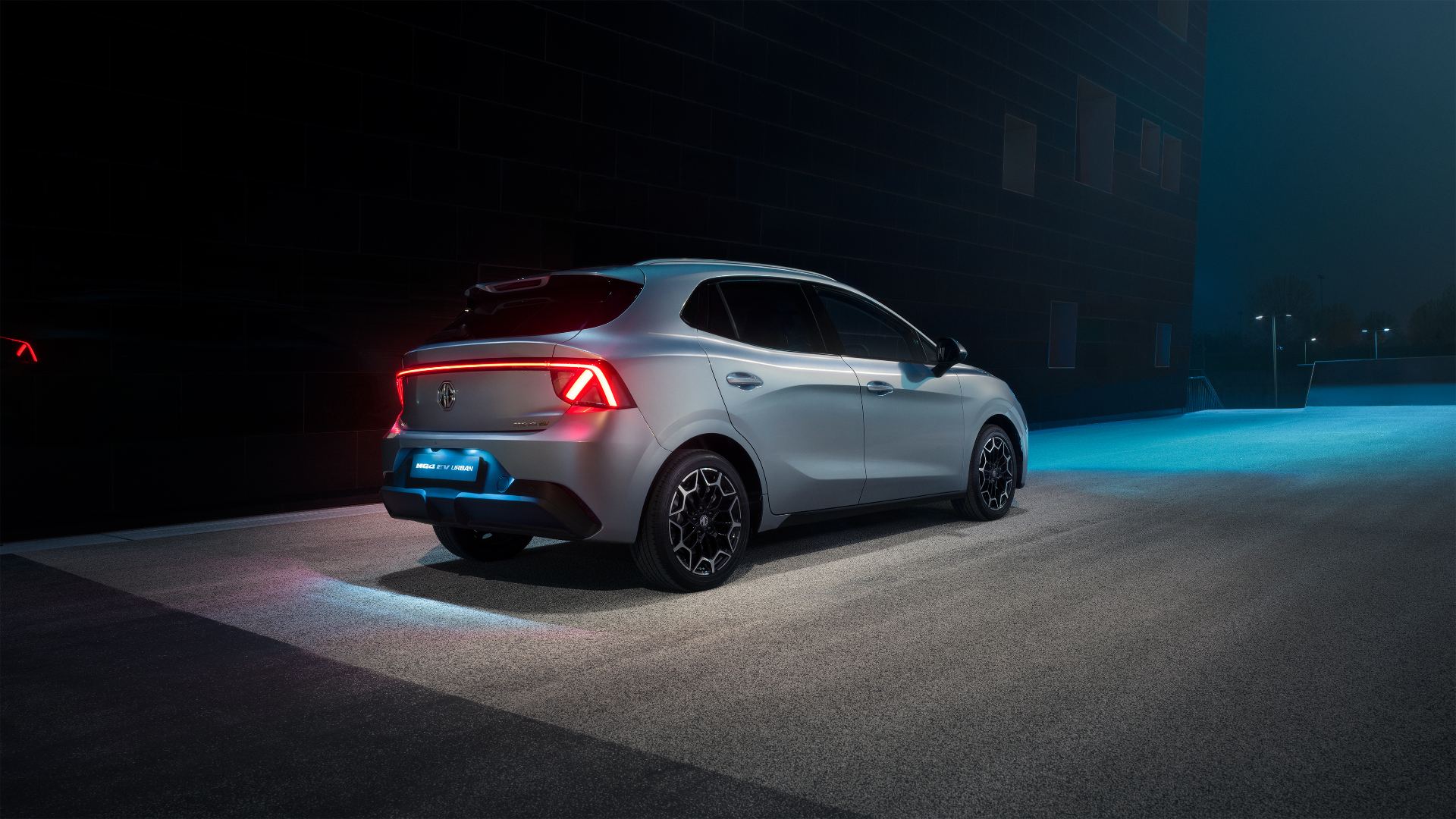
Our current line-up is the MG S5 Electric, the MG4 Electric (43 kWh and 54 kWh) and the MG ZS. The range will grow as further models are introduced.
Good to know
Sections 02 to 05 of this guide cover electric models in detail. If you are considering a petrol model, your sales consultant will walk you through what applies to your specific vehicle.
Charging and running costs
Charging is the biggest change for most first-time electric owners, and the one that turns out to be simplest. Here is how it works and what it costs.
There are two main ways to charge, and most owners use a combination of them: a home AC wall box installed at your house or parking bay, and public AC and DC charging stations.
Good to know
In everyday use, the large majority of charging happens at home, overnight. You plug in when you arrive and start each morning with a full battery, in the same way you charge a phone. Public and fast charging are for longer journeys rather than daily routine.
It depends entirely on the charger you use. A home AC wall box takes roughly 6 to 10 hours for a full charge. A DC fast charger takes around 30 to 45 minutes to reach approximately 80%, depending on the model and the charger output.
You may notice that fast charging slows down noticeably above 80%. This is deliberate. The vehicle reduces the charging rate to protect the long-term health of the battery, which is why public fast-charging figures are usually quoted to 80% rather than to full.
Your charging cost depends on two things: the size of your battery and the electricity tariff you pay. A full home charge typically costs considerably less than filling the tank of a comparable petrol vehicle.
Good to know
To estimate your own cost, multiply your battery size in kWh by your electricity rate per kWh. Your sales consultant can run this calculation against your actual tariff and monthly mileage.
Yes. If your home has a correctly sized solar installation and a compatible EV charger, you can charge your MG from solar energy and reduce your running cost further still.
We would recommend having your solar provider confirm that your system capacity and inverter are suitable before you commit to a home charger specification.
This depends on the battery chemistry in your model. Where your MG uses a Lithium Iron Phosphate (LFP) battery, as the MG4 43 kWh does, you should charge to 100% at least once a week.
The reason is practical rather than mechanical. A regular full charge allows the battery management system to recalibrate, which keeps the range figure on your dashboard accurate. Your owner's manual confirms which battery your vehicle carries, and your service advisor can confirm it too.
Yes. Vehicle-to-Load (V2L) technology allows you to draw power from the vehicle itself. Using an adapter in the external charging port, you can run household appliances, laptops, tools or camping equipment directly from the car.
It is a genuinely useful feature during a power outage, at a site, or on a weekend away.
Only marginally. A parked electric vehicle draws a very small amount of power, in the region of 1% to 2% of battery capacity per month, to keep security systems and onboard electronics active.
Good to know
If you are leaving the vehicle for several weeks, park it with a mid-level charge rather than empty or completely full, and check on it occasionally.
Driving and safety
The questions in this section come up most often, and the answers are more reassuring than most people expect.
Yes. Battery packs, electric motors and charging ports are fully sealed against water intrusion and carry an IP67 rating, an international standard for protection against dust and water immersion. Built-in safety breakers isolate the electrical current immediately if moisture or a fault is detected during charging.
MG vehicles are designed and tested for wet conditions, so the rainy season requires no special precautions. Normal good judgement still applies: as with any vehicle, avoid driving through deep standing water where you cannot see the road surface.
Electric vehicle fires are statistically less common than petrol and diesel vehicle fires. Battery packs are housed in reinforced, armoured cells engineered to withstand severe impact, and an automatic disconnect isolates the high-voltage system the instant an airbag deploys.
If your vehicle is ever involved in a collision, contact our service team before arranging any repair, so that the high-voltage system is inspected by technicians trained to work on it.
No, and this is one of the quiet pleasures of driving one. Almost all electric vehicles use a single-speed direct drive, because an electric motor delivers its full torque instantly from a standstill.
The practical effect is smooth, uninterrupted acceleration with no gear changes, no clutch and no transmission to service.
Your MG has a conventional 12V auxiliary battery that powers the lights and screens, separate from the high-voltage drive battery. If that 12V battery goes flat, it can be jump-started in the usual way.
Good to know
Never use your MG to jump-start a petrol or diesel vehicle. The current surge demanded by a conventional starter motor can damage the electronic converters in your vehicle. If someone needs a jump start, use a portable jump pack instead.
Service and maintenance
Electric vehicles ask less of you than petrol vehicles, but they do not ask for nothing. This section sets out what to expect and when.
Yes. Electric vehicles have far fewer moving parts and cost less to maintain, but regular servicing remains essential to safety, reliability and performance. It is also a condition of keeping your warranty valid.
What disappears is the routine engine work: no oil changes, no spark plugs, no fuel filters, no timing belts. What remains are the systems that keep the vehicle safe and efficient.
Our technicians inspect high-voltage battery health, the electric motor and drivetrain, the braking system including brake fluid, suspension and steering, tyres, rotation and wheel alignment, the air conditioning system and coolant, software updates, and the cabin air filter alongside a general vehicle inspection.
Every 10,000 km or 12 months, whichever comes first.
Good to know
Book a week or so ahead where you can, and keep every service record. A complete, stamped service history protects your warranty and materially improves your resale value when you upgrade.
Routine servicing on an MG electric vehicle generally costs less than servicing a comparable petrol or diesel vehicle, simply because there is less to do. Our service team can share the current schedule of service pricing for your model on request.
At the authorised Simba Corporation MG service centre.
This is not simply a preference. The authorised centre uses genuine MG parts, employs technicians factory-trained to work safely on high-voltage systems, and records every visit against your vehicle, which is what protects your warranty cover.
Good to know
Work carried out elsewhere, particularly on the high-voltage system, may affect your warranty. If you are ever unsure whether a repair is covered, call us before authorising the work.
Yes. Simba Corporation holds stock of genuine MG parts to support routine servicing, maintenance and repair, so that your vehicle spends as little time off the road as possible. Parts are competitively priced and represent strong value.
Battery life and warranty
The two questions behind most electric vehicle hesitation are how long the battery lasts and who carries the risk. Here are both answers.
A modern electric vehicle battery is generally expected to give 10 to 15 years of service. It does not fail suddenly; capacity declines gradually, typically in the region of 1% to 2% a year, which shows up as a slow reduction in range rather than a breakdown.
MG covers the high-voltage battery under a dedicated warranty, so the early years of that curve are covered by us rather than by you.
Your vehicle carries two separate warranties: a vehicle warranty of 5 years or 120,000 km, whichever comes first, and a high-voltage battery warranty of 8 years or 120,000 km, whichever comes first.
Both cover manufacturing defects, subject to the full terms and conditions supplied with your vehicle.
As with any manufacturer warranty, cover applies to defects in manufacture rather than to normal wear, accident damage or unauthorised modification. Items that wear through use, such as tyres, brake pads and wiper blades, are replaced as part of routine maintenance.
Good to know
Your warranty booklet is the definitive document. Keep it with your service records, and ask our service team if any point in it is unclear. We would far rather answer the question in advance than after the fact.
Buying, financing and trading in
When you are ready to move, these are the practical routes into an MG.
Yes. We work with selected financial institutions to offer flexible lease-to-own and asset finance solutions for both individual and corporate buyers.
Our sales team will walk you through the options and recommend the structure that best fits your circumstances, whether you are buying a single vehicle or building a fleet.
Yes. Simba Corporation accepts trade-ins, subject to inspection and valuation. Bring your vehicle in and we will assess it and set the value against your MG.
Yes. When you are ready to move to a newer MG, we can assist with the trade-in and the transition. Keeping your service history complete with us is the single best thing you can do to protect the value you carry into that upgrade.
Get in touch and we will arrange a test drive at a time that suits you. If you are weighing up electric against petrol, tell us: we will structure the drive so that you experience the difference for yourself rather than take our word for it.
Talk to us
If your question is not answered here, ask us. There is no such thing as a question that is too basic. Our job is to make sure you drive away understanding your vehicle.
Call or WhatsApp
0703 046 000
simbacares@simbacorp.com
Showroom
Aspire Centre, 206 Chiromo Road, Westlands, Nairobi